Question Bank Limitations for IT Certification Exams
September 13, 2026
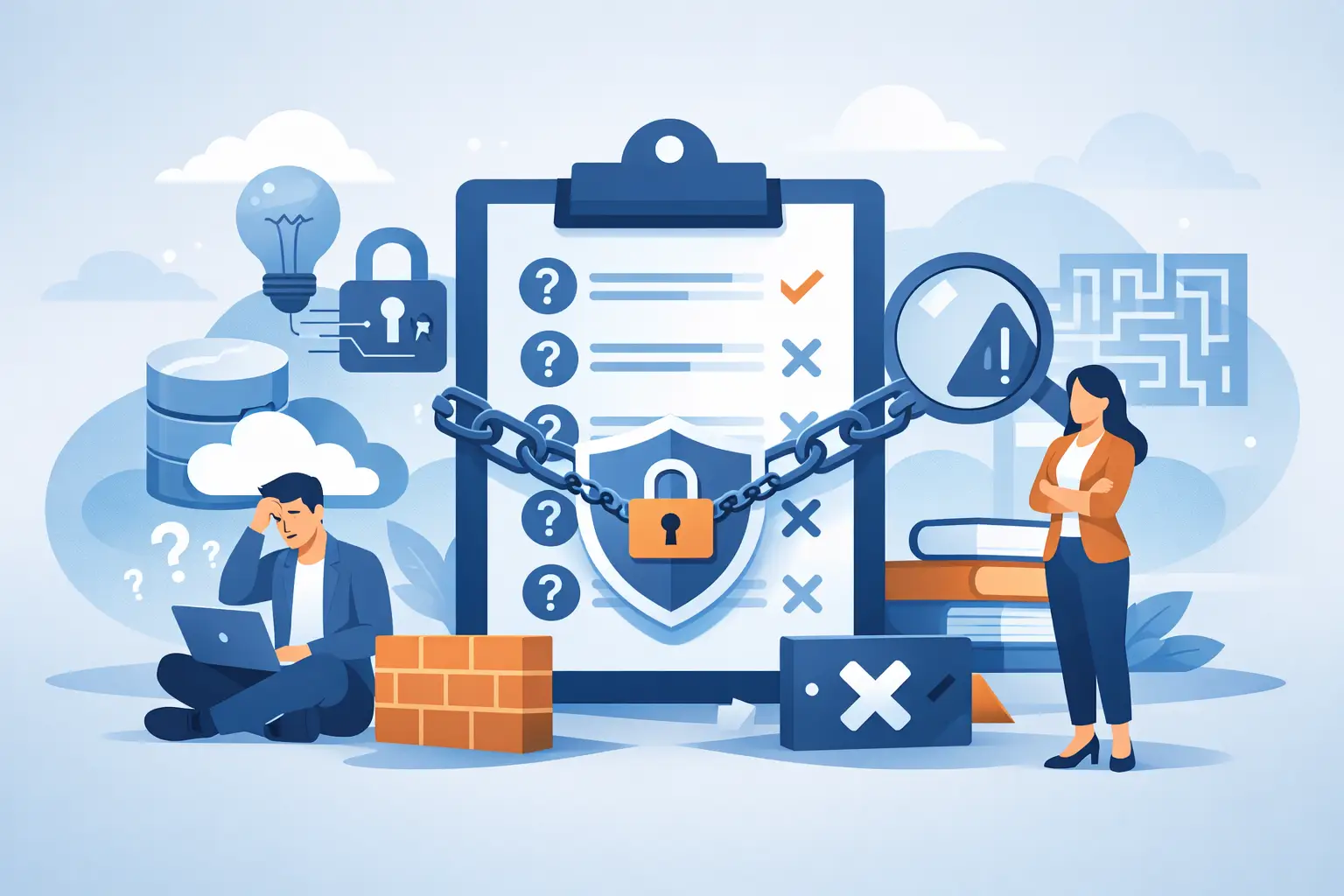
A score of 90 percent in a question bank can feel like a green light. Then the real AWS, Azure, or Google Cloud exam presents a long scenario, several plausible answers, and a clock that suddenly feels much faster. That gap is where question bank limitations become expensive, especially when an exam attempt affects your career plans, budget, and confidence.
Question banks still have a place in certification prep. They can reinforce terminology, expose weak domains, and give you repetition when you need it. The problem starts when practice questions become the entire study strategy. Passing a bank is not the same as demonstrating exam readiness.
The Biggest Question Bank Limitations
A static collection of questions measures recognition well. Certification exams often measure judgment. You may recognize the correct AWS service in a familiar prompt, but struggle when the exam changes the business requirement, adds security constraints, or asks for the most cost effective design.
This distinction matters because cloud certifications are built around decisions. The exam is rarely asking whether you have seen a service name before. It is asking whether you can interpret requirements, eliminate options, identify tradeoffs, and select the answer that best fits the scenario.
Memorization can look like mastery
Repeatedly seeing the same questions creates familiarity. Familiarity feels like knowledge, but it can be misleading. After enough attempts, many learners remember the wording, the option position, or a phrase from an explanation. Their score rises even if they could not solve a new version of the problem.
This is especially risky with large certification domains. A learner may memorize that a particular Azure service is associated with a certain use case, yet miss why it is preferred over alternatives when availability, compliance, latency, or operational effort changes. Real mastery means you can explain the decision without relying on the exact question that taught it.
A simple test helps. Before selecting an answer, state the requirement in your own words and explain why each incorrect option fails. If you cannot do that, the correct click may be recall rather than understanding.
Coverage is often uneven
Not all question banks represent an exam blueprint evenly. Some overuse easy concepts because they are faster to write. Others focus heavily on popular services while underrepresenting architecture, identity, governance, troubleshooting, or scenario based questions.
Even a large bank can have narrow coverage. Five hundred questions are not automatically better than one hundred well designed questions mapped to objectives. Quantity becomes a problem when it encourages endless practice without showing which skills you have actually validated.
Certification content also changes. Cloud providers release services, revise features, and update exam objectives. A bank that has not been reviewed carefully can teach outdated terminology or reward answers that no longer align with current guidance. Learners should treat every question source as a practice tool, not as an unquestionable answer key.
Explanations may not teach decision making
A correct answer alone has limited value. A useful explanation should connect the choice to the stated requirement and clarify why the competing answers are wrong. Without that reasoning, learners can collect facts without building the mental framework needed for unfamiliar questions.
Short explanations are not always bad. They work for straightforward knowledge checks. But complex architecture and operations scenarios require more. You need to understand the constraint that controls the decision. Is the question prioritizing least privilege, managed operations, durability, performance, or cost? A high quality review process teaches you to find that signal quickly.
Static practice does not reproduce exam pressure
Most certification exams test more than technical recall. They test pacing, concentration, and composure across a full session. Working through ten untimed questions during a lunch break does not reveal how your judgment changes after an hour of sustained problem solving.
This is one of the most practical question bank limitations. Without timed, full length practice, you may not know whether you read too quickly, spend too long on difficult scenarios, or lose accuracy late in the exam. Those are performance issues, and performance issues can cause a failed attempt even when your technical foundation is solid.
What Realistic Practice Adds
A realistic exam simulator changes the question from, “Have I seen this before?” to, “Can I perform under conditions that resemble the exam?” That shift produces more useful evidence of readiness.
Simulated tests help you practice pacing across mixed domains. They force you to move between security, networking, storage, governance, and architecture without a convenient topic label. That is closer to the experience of a professional certification exam, where the next question may require a completely different part of your knowledge base.
Analytics add another layer. An overall score is useful, but domain performance is more actionable. If your results show consistent weakness in IAM policies, disaster recovery, or cost optimization, you have a clear study priority. If you miss questions only when a timer is running, your next step may be exam strategy rather than another content course.
At CertSim, realistic simulations, AI assisted review, and weekly study recommendations are designed to turn those signals into a focused plan. The objective is not to keep you answering questions forever. It is to identify what will most improve your next practice session and your final exam performance.
Use Question Banks Without Letting Them Mislead You
Question banks work best as one component of an intentional system. Start by learning the exam objectives and the underlying concepts. Then use questions to test recall and expose gaps. When you miss an item, do more than read the answer. Identify the requirement you misunderstood, review the concept, and solve a new question that tests the same decision from a different angle.
Your study routine should also include timed sessions. Begin with shorter sets if you are early in your preparation, then move into mixed, timed practice as your exam date approaches. Review not only what you missed but also what you guessed correctly. A lucky answer is a gap that has not surfaced yet.
It also helps to track patterns across several sessions. One missed networking question may be random. Repeated misses involving routing, private connectivity, or security groups point to a real weakness. The same applies to timing. A single slow session may reflect fatigue, while a consistent pacing issue requires a deliberate change in approach.
Do not chase a perfect question bank score at the expense of broader readiness. If you can explain core services, interpret requirements, eliminate distractors, manage time, and maintain accuracy across new scenarios, your practice is doing its job.
When a Question Bank Is Enough and When It Is Not
For an early knowledge check, a question bank may be enough. If you have just completed a module on Azure identity or AWS storage, a short set of focused questions can confirm whether the concepts stuck. It is efficient, targeted, and useful.
As the exam gets closer, the standard should rise. You need practice that combines domains, uses realistic wording, applies time pressure, and gives feedback detailed enough to direct your next study block. The more expensive or career critical the certification, the less sense it makes to rely on memorized patterns.
There is also a difference between beginner and experienced learners. A career switcher may need more foundational instruction before practice questions become valuable. An experienced cloud administrator may know the technology but need more work translating hands on experience into exam specific decisions. Both learners benefit from practice, but neither should assume a familiar bank score tells the whole story.
Treat every practice result as evidence, not a verdict. The goal is not to prove that you can recognize yesterday’s questions. It is to build the calm, repeatable decision making that lets you earn the credential when the questions are new and the timer is real.
Ready to practice?
Take realistic practice exams with AI explanations and track your readiness.
Start free