Cloud Certifications That Move Your Career Forward
13 de outubro de 2026
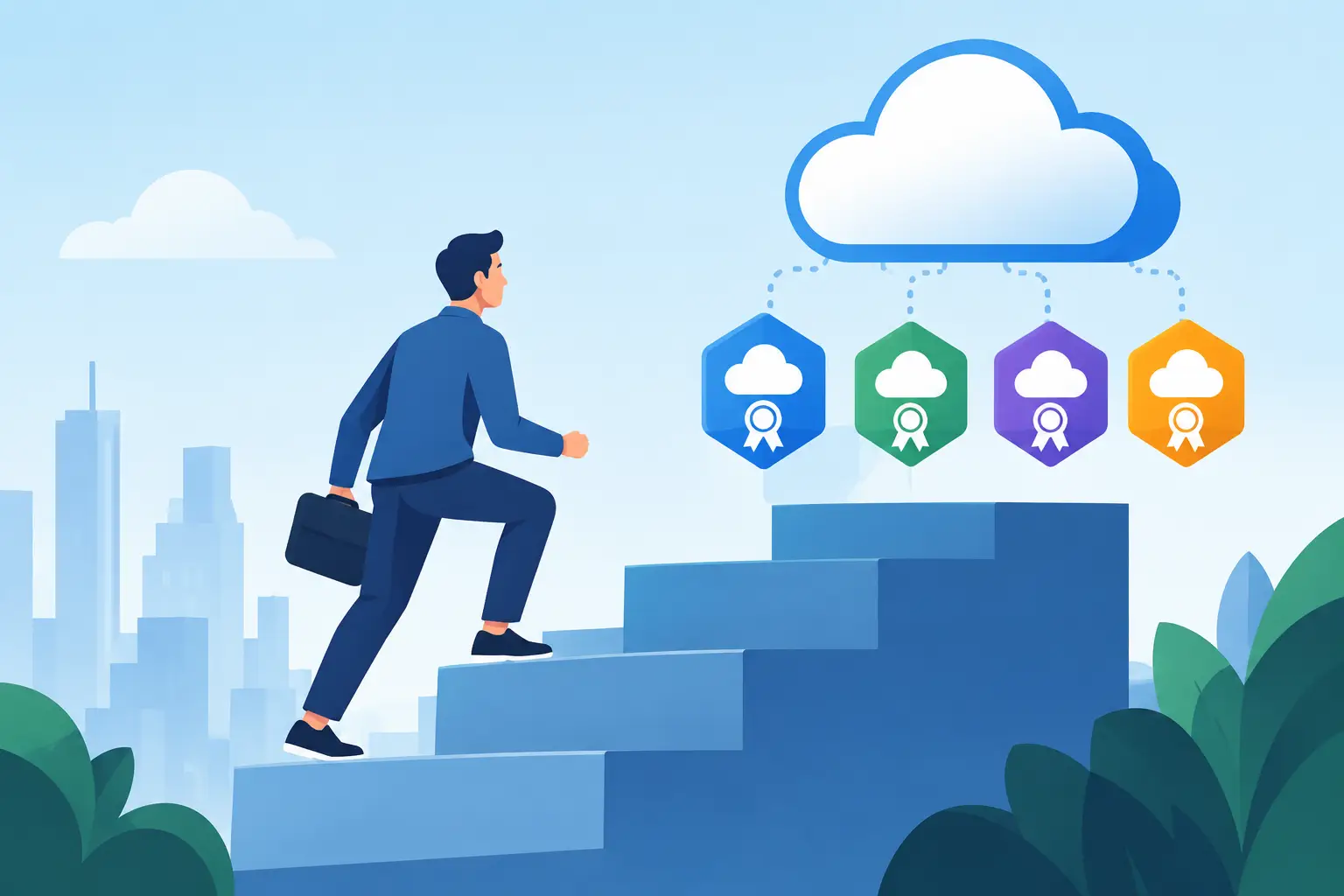
A cloud certification is not just another line on a resume. For a cloud engineer seeking a stronger role, a systems administrator moving into infrastructure, or a career switcher competing for a first technical opportunity, it can provide credible proof that your knowledge meets an industry standard. The right credential can change how hiring managers, recruiters, and your own team evaluate your readiness.
That said, cloud certifications are not interchangeable. Choosing one because it is popular, or studying without a clear exam strategy, can cost you time, money, and momentum. A better approach starts with the role you want, the platform your market values, and a preparation process that proves you can perform under real exam conditions.
Why Cloud Certifications Still Matter
Cloud platforms have become central to how organizations build, secure, and operate technology. AWS, Microsoft Azure, and Google Cloud all offer services that touch compute, networking, identity, data, security, automation, and cost management. Employers need people who can make sound decisions across those services, not simply recognize product names.
A certification does not replace real experience. It does, however, make your skills easier to evaluate. This matters when your work history is still developing, when you are changing specialties, or when a recruiter has limited time to compare candidates. A recognized credential tells them you have studied the platform's core concepts, service relationships, and recommended practices.
For established professionals, certification can also create leverage. It can support a promotion conversation, help you qualify for a client project, or strengthen your case for moving into cloud architecture, DevOps, security, or platform engineering. The value is highest when the exam aligns with work you already do or work you are actively pursuing.
Choose Cloud Certifications Based on the Role
The best exam is rarely the one with the most social media attention. Start with a practical question: what job do you want to be considered for in the next six to twelve months?
If you are entering cloud technology, a foundational exam can build confidence with cloud concepts, pricing, shared responsibility, identity, and basic services. These credentials are useful for IT support professionals, students, account teams, and career changers who need a structured introduction. They are not usually enough on their own for an engineering role, but they can establish a credible starting point.
If you already manage systems, networks, applications, or infrastructure, an associate level certification is often the stronger career move. AWS Solutions Architect Associate, Azure Administrator Associate, and comparable Google Cloud credentials test broader technical judgment. They ask you to choose services, evaluate tradeoffs, design for reliability, and apply security controls within realistic scenarios.
Professional and specialty exams demand more depth. They are designed for people who have substantial platform experience or are working toward specialized responsibilities such as cloud security, data engineering, machine learning, networking, or advanced architecture. They can be powerful differentiators, but only when you have the foundation to understand why an answer is correct, not just memorize it.
Your target employer also matters. Microsoft Azure may be the clearest choice if you work in an organization built around Microsoft identity, Windows Server, and enterprise applications. AWS may offer more direct relevance for teams operating a broad set of cloud native workloads. Google Cloud can be especially meaningful in organizations focused on data, analytics, and modern application platforms. Review job postings in your location and desired field before committing to a path.
Passing Requires More Than Watching Courses
Many candidates begin with videos, documentation, and notes. Those resources are valuable, but passive study creates a common problem: familiarity gets mistaken for readiness. You may understand an instructor's explanation and still struggle to select the best answer when several options sound plausible.
Certification exams assess decisions under constraints. A question may ask for the most cost effective architecture, the least operational overhead, the strongest security posture, or the fastest recovery option. To answer well, you need to understand each service, the requirement hidden in the wording, and the reason one option satisfies the full scenario better than the others.
That is why exam practice should begin before you feel fully prepared. Early practice reveals knowledge gaps while there is still time to fix them. It also shows whether your problem is technical understanding, time management, question interpretation, or exam anxiety.
Use practice results as diagnostic data. If identity and access management questions repeatedly cause misses, return to roles, policies, authentication methods, and least privilege design. If architecture questions are difficult, map the requirements in each scenario: availability, performance, compliance, recovery, operations, and budget. Then explain why every incorrect option fails. This review process creates durable knowledge.
Build a Study Plan You Can Measure
A focused plan is more effective than trying to study every domain equally. Begin with the official exam objectives and rate your current confidence for each area. Be honest. A topic you have seen once is not the same as a topic you can apply in a scenario without prompts.
Set weekly outcomes rather than vague goals. For example, dedicate one week to networking and connectivity, then test yourself on virtual networks, routing, load balancing, private access, and name resolution. The following week might focus on identity and security. Each study block should include learning, applied practice, and review.
Track more than your total score. Domain performance is more useful because it tells you where your next hour should go. Also track how often you change answers, how long complex questions take, and whether you miss questions because you overlook a phrase such as "most secure" or "minimum administrative effort." These patterns matter on exam day.
A good simulator makes this process less abstract. CertSim combines realistic exam style questions with AI assisted support, study plan recommendations, analytics, and progress features that keep preparation focused. The goal is not to make studying feel easy. The goal is to make every session produce a visible improvement in readiness.
Practice Under Real Testing Conditions
Untimed quizzes are useful for learning. Timed simulations are necessary for performance. At some point, you need to experience the pressure of reading unfamiliar scenarios, managing the clock, and committing to answers without external help.
Schedule full practice exams after you have covered the major objectives. Use the same conditions you expect during the real test: a quiet space, one sitting, no notes, and a strict timer. When you finish, do not judge the attempt only by the score. Review your decisions carefully.
Look for patterns in questions you answered correctly by guessing. Those are weak areas disguised by a lucky result. Similarly, do not dismiss incorrect answers as trick questions. Most difficult certification questions are testing prioritization. The answer may be technically possible, but not the best fit for the stated requirement.
You should also avoid chasing a perfect practice score. Question banks can vary in difficulty and wording, and certification vendors update exam blueprints over time. Consistent performance across multiple realistic simulations, paired with a clear understanding of your weak domains, is a better readiness signal than one exceptional result.
Make the Certification Work After You Pass
Passing the exam is a milestone, not the finish line. Add the credential to your resume and professional profile, but connect it to practical evidence. Mention a lab environment you built, a migration project you supported, an automation workflow you created, or a security control you implemented. Employers respond to proof that you can translate certification knowledge into outcomes.
Keep building after the exam. Cloud services change, new features appear, and organizations use platforms in different ways. A certification gives you a framework for continuous learning, but your career advances when you apply that framework to real systems and real constraints.
Choose the cloud credential that supports the work you want next, prepare with discipline, and practice until the exam environment feels familiar. When you can explain your decisions with confidence, you are preparing for more than a passing score. You are preparing to be trusted with the work that follows.
Ready to practice?
Take realistic practice exams with AI explanations and track your readiness.
Start free