How a Certification Simulator for Beginners Works
September 3, 2026
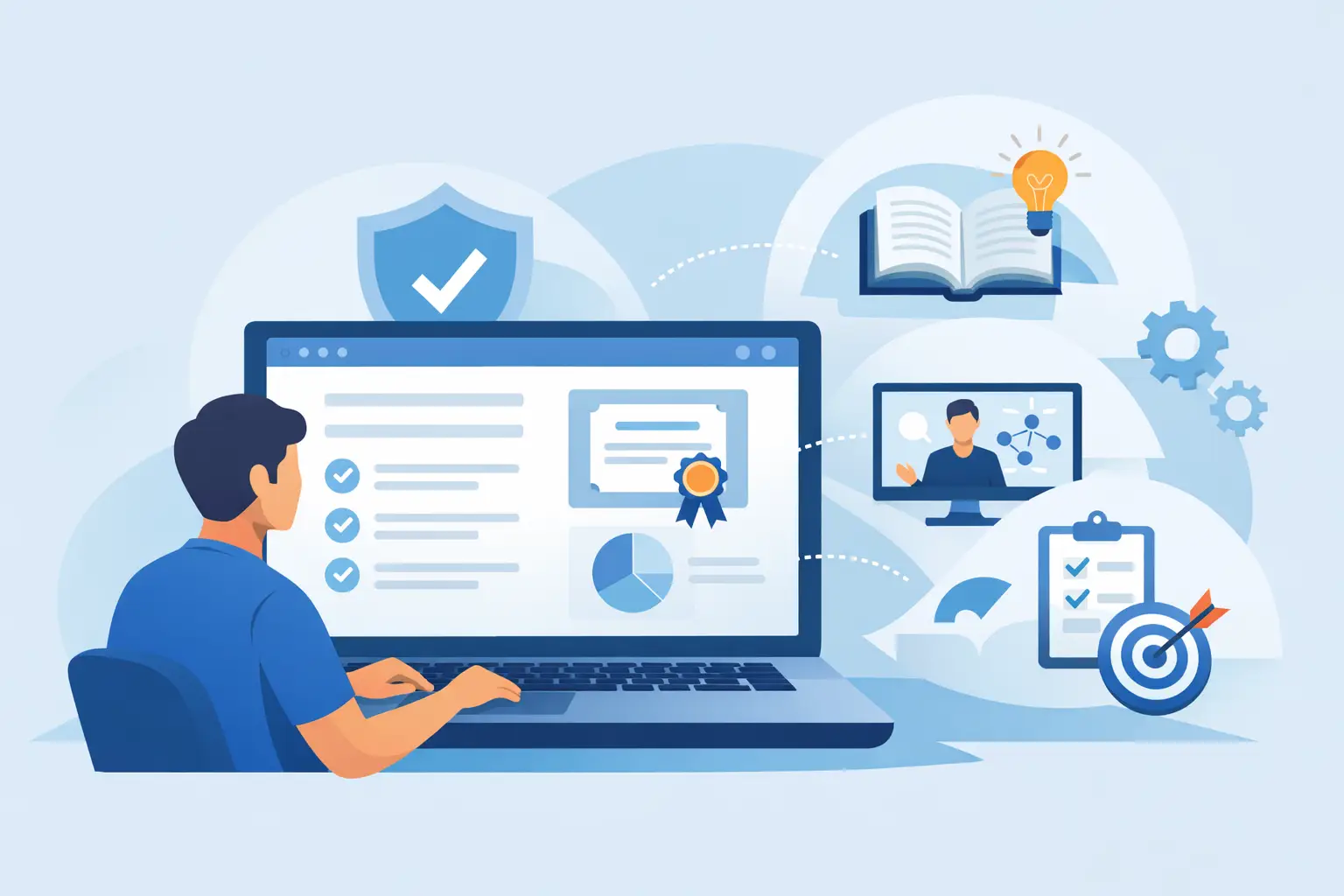
A certification exam can feel expensive before you even book it. The pressure is not only about knowing AWS, Azure, Google Cloud, or another platform. It is about proving what you know in a timed environment where every question counts. A certification simulator for beginners gives you a controlled place to practice that pressure, find weak areas, and build a plan before exam day.
For new IT professionals, students, and career switchers, this is more useful than simply reading another guide or memorizing a long set of answers. You need to understand how certification questions are framed, how quickly you can reason through scenarios, and where your knowledge breaks down. A strong simulator turns those unknowns into measurable next steps.
What a Certification Simulator for Beginners Should Do
A simulator should do more than present random multiple choice questions. Its primary job is to recreate the decision making required by a real certification exam. That means questions should reflect the language, scenario depth, time pressure, and technical tradeoffs common to the exam you are preparing for.
For example, an AWS candidate may need to choose the most cost effective and secure architecture from several technically possible options. An Azure candidate may need to identify the best service for identity, governance, or data protection. Knowing definitions is useful, but certification exams often test whether you can apply that knowledge under constraints.
Beginners benefit most when the simulation has structure. Start with shorter topic based sessions while you are learning core services and concepts. Then move into full length practice exams when you need to test endurance, pacing, and exam readiness. This progression prevents a common mistake: taking full mock exams too early, receiving a discouraging score, and not knowing what to study next.
A quality simulator also explains why an answer is correct and why the alternatives are weaker. That feedback matters because a wrong answer can come from several different problems. You may not know the service, misread a requirement, overlook a keyword such as least operational effort, or rush because you are watching the clock. Each issue needs a different response.
Start With a Baseline, Not a Guess
Many beginners choose a certification, gather videos, articles, flashcards, and question banks, then study everything at once. The result is fragmented preparation and a vague sense of progress. A baseline assessment creates a clearer starting point.
Take an initial practice session without searching for answers. The score is not a verdict on your potential. It is a map of your current knowledge. Review your results by domain, such as security, networking, storage, compute, identity, or monitoring. Look for patterns instead of focusing only on the final percentage.
If you miss questions across several domains, begin with fundamentals. If your overall result is solid but you repeatedly miss scenario questions involving cost or security, your knowledge may be broad but not yet exam ready. That distinction saves study time. You do not need to relearn every topic. You need targeted practice on the decisions the exam expects you to make.
Avoid comparing your first score to someone else’s score. Candidates come in with different professional experience. A systems administrator moving into cloud may understand identity and networking well but need more practice with cloud billing models. A student may know cloud services from coursework but need more repetition with operational scenarios. Your baseline should guide your plan, not define your ceiling.
Practice the Skills Behind the Score
Certification performance is a combination of technical knowledge, question interpretation, pacing, and confidence. A simulator is most effective when you train all four.
First, practice reading for requirements. Certification questions often include details that tell you exactly what the answer must optimize. Watch for requirements involving cost, availability, security, scalability, compliance, automation, or minimal administrative effort. Before reviewing the answer choices, state the core requirement in your own words. This helps prevent attractive but unnecessary solutions from pulling you off course.
Second, build a pace you can sustain. Do not rush every question. Answer the straightforward items efficiently, then mark complex scenarios for review if the platform allows it. The goal is not to answer every question instantly. The goal is to finish with enough time to revisit the items that require careful comparison.
Third, review incorrect answers with intent. Do not simply read the explanation and move on. Identify the reason behind the miss. Was it a content gap, a terminology gap, or a strategy error? Keep a short error log with the domain, the concept, and the reason you chose the wrong option. Over several practice sessions, this record will reveal the exact habits limiting your score.
Finally, retake topics after you study them. Improvement should be visible. If you studied IAM policies, virtual networks, Kubernetes basics, or backup strategies, test that area again. A simulator becomes valuable when it shows whether the study time actually improved your ability to answer exam style questions.
Use Analytics to Build a Weekly Study Plan
A passing score is the outcome. Consistent preparation is the system that gets you there. Analytics can turn your practice data into a realistic weekly study plan rather than an oversized checklist.
A useful plan balances weak domains with retention of stronger ones. Spending every hour on your weakest topic can create new gaps in areas you once understood. Instead, dedicate most of your practice time to two priority domains, while using shorter review sessions to maintain the rest.
For example, if you are preparing for an entry level cloud certification and your results show weak performance in networking and security, spend several sessions reviewing those topics and answering targeted questions. Continue to include a smaller number of compute, storage, and billing questions each week. This approach improves depth without sacrificing coverage.
Set measurable goals that match your timeline. A beginner studying for six weeks may aim to complete a few focused sessions each week, review every missed question, and take a full simulation near the end of each week. A candidate with two weeks left may need more frequent timed sessions, faster review cycles, and focused work on recurring errors. The right schedule depends on your starting point, available time, and the complexity of the exam.
CertSim can support this process with AI assisted guidance, study plan recommendations, performance analytics, and realistic simulations designed for major IT and cloud certification tracks. The value is not just more questions. It is a clearer route from your current score to the skills you need on exam day.
Know When You Are Ready to Schedule
No practice tool can guarantee an outcome, and one excellent mock score is not enough evidence by itself. Readiness comes from repeatable performance across multiple sessions.
You are moving closer to exam readiness when your scores stay consistently above your target range, your weak domains are shrinking, and you can explain why incorrect options are wrong. You should also be able to complete timed practice without panic or a last minute rush through unanswered questions.
Be careful with memorization. If you recognize a question because you have seen it before, that does not always mean you can solve a new version of the same problem. Look for variation in question scenarios and test yourself on the underlying concept. Can you explain when to use a managed database instead of virtual machines? Can you identify the security control that addresses a specific risk? Can you choose a service based on a business requirement rather than its familiar name?
If the answer is usually yes, your confidence is becoming earned confidence. That is the kind that holds up when the wording changes and the timer starts.
Turn Exam Anxiety Into a Repeatable Process
Exam anxiety often comes from uncertainty. You may wonder whether the real test will be harder than your study materials, whether you will freeze on scenario questions, or whether you have overlooked a critical domain. Realistic simulation cannot remove every unknown, but it gives you evidence that you can perform under conditions similar to the exam.
Treat every practice attempt as a performance review. Prepare your space, set a timer, avoid outside help, and review the results honestly. Then make one concrete adjustment before the next session. Improve a weak topic, change how you read requirements, or work on pacing. Small adjustments compound quickly.
Your first certification does not require perfect knowledge. It requires disciplined preparation, sound judgment, and enough practice to trust your process when it matters. Start with one simulated session, learn from the result, and let each round of feedback make your next attempt stronger.
Ready to practice?
Take realistic practice exams with AI explanations and track your readiness.
Start free